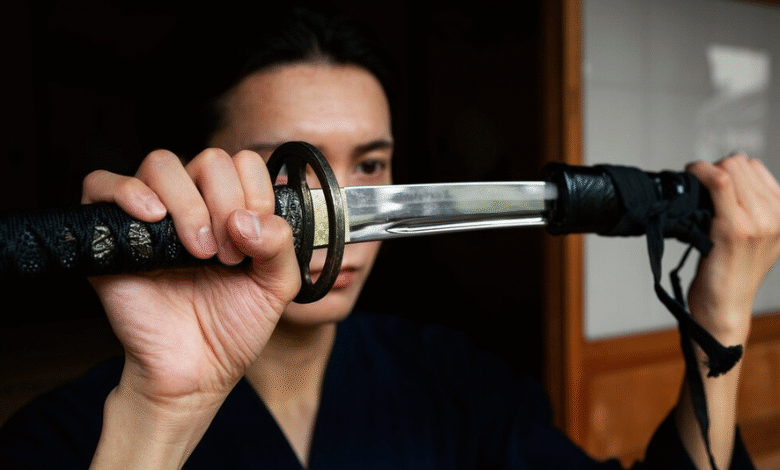
The katana, a symbol of honor, precision, and the warrior spirit of Japan, is more than just a blade. Its full essence is only realized when it is sheathed in a saya, the traditional scabbard that protects and completes it. The phrase “blade sheathed in a saya” invokes not only a literal image but a deeply metaphorical one, representing discipline, restraint, and the harmony between power and peace.
In this comprehensive guide, we explore the history, construction, symbolism, and craftsmanship behind the katana and its saya, focusing on why this union continues to inspire martial artists, collectors, and historians worldwide.
Origins of the Katana and Its Sheath
The katana emerged during Japan’s Muromachi period (1336–1573) as a response to the changing nature of warfare. Warriors needed a sword that could be drawn quickly and used effectively in close quarters, especially while on horseback.
The saya the lacquered wooden scabbard into which the blade is inserted was developed in tandem to complement the katana’s functionality and aesthetics. Together, they form a balanced instrument of war and art, revered in both combat and ceremony.
Construction of the Saya – A Masterpiece of Craftsmanship
A saya is not merely a holder for the blade; it is a finely crafted object requiring exceptional skill and deep understanding of the sword’s geometry. Each saya is custom-made to perfectly fit its corresponding blade, often taking weeks of detailed work.
Materials Used
-
Honoki wood (Japanese magnolia) is the most common material, known for being lightweight, durable, and non-acidic essential for preventing blade corrosion.
-
Buffalo horn is used for critical stress points like the koiguchi (mouth of the saya), kurikata (cord knob), and kojiri (end cap).
-
The exterior is often finished with urushi lacquer, a natural resin that provides high gloss, water resistance, and durability.
Interior Design
-
The interior is carved to precisely cradle the blade, ensuring a snug fit that allows the katana to be drawn smoothly without rattling or damage.
-
Some sayas include a thin layer of oil-soaked paper to aid in preserving the blade’s polish.
Components of the Saya and Their Functions
Koiguchi (鯉口)
The mouth of the saya, reinforced with buffalo horn. It ensures a tight fit and secure hold over the habaki (blade collar), allowing for a clean, controlled draw.
Kurikata (栗形)
A small knob or loop fitted on the side of the saya. The sageo (cord) is tied through this component, used to secure the saya to the samurai’s belt (obi).
Kojiri (鐺)
The end cap of the saya. Often decorative and made from horn or metal, it protects the bottom of the scabbard and can be intricately carved or engraved.
Sageo (下緒)
The cord tied through the kurikata. In traditional practice, the sageo is not merely decorative it was used in various techniques to control the saya during battle or ceremony.
Symbolism of a Blade Sheathed in a Saya
The imagery of a “blade sheathed in a saya” transcends the physical. It is a powerful metaphor in Japanese philosophy, martial arts, and aesthetics:
-
Self-Control: A swordmaster’s greatest strength is not in drawing the blade, but in choosing not to.
-
Balance: The union of lethal force (blade) with calm elegance (saya) reflects the yin and yang of the warrior’s spirit.
-
Readiness with Peace: A sheathed blade signals preparedness without aggression a state of alert serenity.
-
Aesthetic Harmony: The katana and its saya are designed not only for function but to represent the wabi-sabi ideals of beauty in imperfection and impermanence.
Saya in Martial Arts and Iaido
In disciplines such as Iaido, Kenjutsu, and Kendo kata, the saya is an essential component of practice. The techniques of nukitsuke (drawing and cutting in a single motion), noto (returning the blade to the scabbard), and saya-biki (sliding the saya back during a draw) are refined over years.
Why the Saya Matters in Dojo Training
-
Ensures blade discipline
-
Trains the practitioner in awareness of positioning and control
-
Enhances understanding of maai (distance) and zanshin (awareness)
A masterful swordsman is judged not only by the sharpness of his cuts, but by the grace and precision with which he handles the saya.
Modern Interpretations and Artistic Expressions
In today’s world, the katana and saya have become symbols of cultural reverence, collector’s passion, and artistic mastery.
Contemporary Saya Designs
-
Artisans now experiment with colored lacquers, metallic powders, maki-e painting, and inlaid mother-of-pearl.
-
Custom saya commissions are sought after by collectors and martial artists who seek both functionality and personalization.
The Blade and Saya in Popular Culture
From samurai films to anime, the motif of a blade sheathed in a saya is ever-present:
-
In Akira Kurosawa’s films, the slow draw of the katana is often more dramatic than the strike.
-
In modern cinema, characters like Kenshin Himura and Zatoichi emphasize the moral weight of when and why to draw the sword.
How to Care for a Katana and Its Saya
Proper maintenance is essential for preserving both the blade and the saya.
Cleaning the Blade
-
Use choji oil (clove-infused mineral oil) to prevent rust
-
Wipe gently with a soft cloth, never with bare hands
Maintaining the Saya
-
Avoid exposure to moisture and extreme temperatures
-
Store in a horizontal position with the edge (ha) facing up to reduce pressure on the saya walls
-
Never insert a dirty or oiled blade directly into the saya without wiping it down first
Storage Advice
-
Display on a katana stand (katana kake) when not in use
-
Ensure the environment is dry and stable, free from humidity or sunlight
Conclusion: The Sheathed Blade as a Way of Life
The phrase “blade sheathed in a saya” encapsulates the very heart of the samurai code strength guided by wisdom, power balanced by restraint. In both form and spirit, the katana in its saya represents a complete entity, unmatched in history, martial discipline, and artistic legacy.
Whether you are a martial artist, a cultural enthusiast, or a collector, understanding this union deepens your appreciation for the Japanese sword tradition and the enduring ideals it embodies.